
Showing all posts about authors
Sydney’s Writers’ Walk to become longer, celebrate other artists
3 November 2025
Located along the shoreline of inner Sydney suburb Circular Quay, Sydney’s Writer’s Walk commemorates well-known authors and playwrights, who are either Australian, or visited the country at some point, with circular plagues set into walkways in the area.
Local writers include Miles Franklin and Peter Carey, while the international cohort is made up of the likes of Rudyard Kipling, and Mark Twain, who were in Australia in 1891, and 1895, respectively.
The Walk was established in 1991, and in 2011 an additional eleven plagues were added, but plans are afoot to add to the Walk in the near future. This makes sense. A bevy of new Australian writers have emerged in the last decade and a half. Numerous notable authors, who were omitted originally, are also in the running for a spot, as are songwriters, who may also be included.
The Sydney’s Writer’s Walk is one of a number of such commemorative walkways in the Sydney area. Others include the Australian Film Walk of Fame, located in Randwick, and the Australian Surfing Walk of Fame, at the beach suburb of Maroubra.
RELATED CONTENT
Australian literature, authors, literature, Miles Franklin, writers
Writers residencies to commence at Waverley Cemetery, Sydney, Australia
31 July 2025
The old caretaker’s cottage is to become home to small groups of writers for five months of the year:
The site’s caretaker’s cottage will soon be converted into a workspace and temporary residence for writers. The program will host three writers at a time, each staying for a five-month period. Accommodation will feature private rooms equipped for reading, research and drafting.
You don’t see it on every travel guide for the Sydney region, but Waverley Cemetery is worth the visit if you’re in town. Perched above a cliff, looking out onto the Tasman Ocean, the experience of walking between row after of row of gravestones is a truly contemplative. Transcendental even. This would be an amazing place to live for a few months. Are bloggers accepted?
RELATED CONTENT
Australian literature, authors, literature, Sydney, writing
Does the world no longer need white male authors?
28 March 2025
Jacob Savage, writing for Compact:
Over the course of the 2010s, the literary pipeline for white men was effectively shut down. Between 2001 and 2011, six white men won the New York Public Library’s Young Lions prize for debut fiction. Since 2020, not a single white man has even been nominated (of 25 total nominations). The past decade has seen 70 finalists for the Center for Fiction’s First Novel Prize — with again, not a single straight white American millennial man.
Have white male authors been over presented for too long? Most likely. Other voices, especially from groups that have been pushed aside for too long, should be heard. But I’m not sure if it can be said that white male writers are intentionally being sidelined. We’re seeing more of the work of people we didn’t previously, and it turns out to be excellent.
RELATED CONTENT
authors, books, literature, writing
David Sedaris flying boasts were not a first-class act in Australia
20 February 2025
One thing you can say for certain about American author David Sedaris is that he polarises opinion. Some people think he’s wonderful. Others are far less complimentary.
Freelance Australian writer Annemarie Fleming, used to be a fan of Sedaris, until she saw him speaking during a recent Australian tour. Fleming found a number of Sedaris’ quips to be off-colour, but his repeated boasts about flying first class, were the last straws:
Throughout his 90-minute performance, he mentioned that he flies first class multiple times. By the third time, I found myself on my feet and walking towards the usher.
Sedaris polarises opinion.
In 2013, I wrote about distasteful comments he made, following the suicide death of his youngest sister, Tiffany. In 2025, that piece remains among one of the most accessed posts on my website.
RELATED CONTENT
The Ledge, a new thriller/whodunit by Christian White
8 August 2024
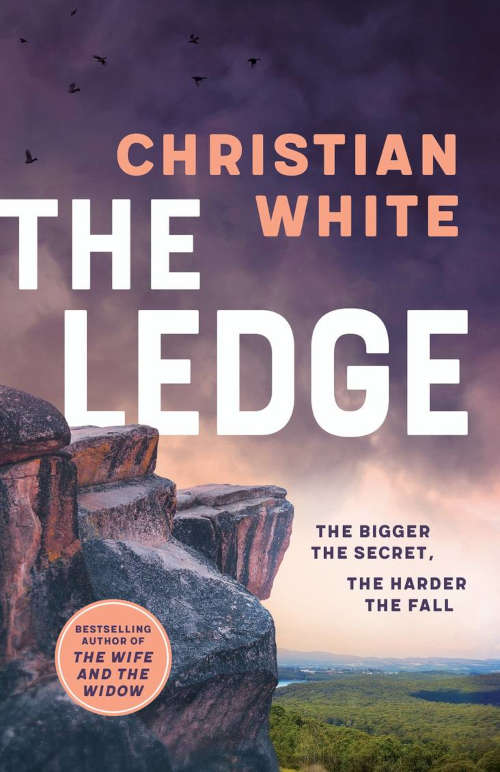
The Ledge is the fourth novel by Victoria based Australian writer, and master of twists that will leave you breathless and dumbfounded: Christian White.
When human remains are discovered in a forest, police are baffled, the locals are shocked and one group of old friends starts to panic. Their long-held secret is about to be uncovered.
It all began in 1999 when sixteen-year-old Aaron ran away from home, drawing his friends into an unforeseeable chain of events that no one escaped from unscathed.
White’s novels are chock full of the things readers of thrillers and suspense love: red herrings, blind alleys, smoke and mirrors, lies, deception, characters with multiple aliases, the list goes on. So far I’ve read The Nowhere Child, White’s 2019 debut, and The Wife and the Widow, which possibly has of one the most mind-blowing twists in the genre.
Wild Place, meanwhile, published in 2021, remains on my TBR list, where it will be joined by The Ledge, when it is published on Tuesday, 24 September 2024.
RELATED CONTENT
Australian literature, authors, books, Christian White, literature, novels
The Echoes, a new novel by Evie Wyld, author of The Bass Rock
5 August 2024
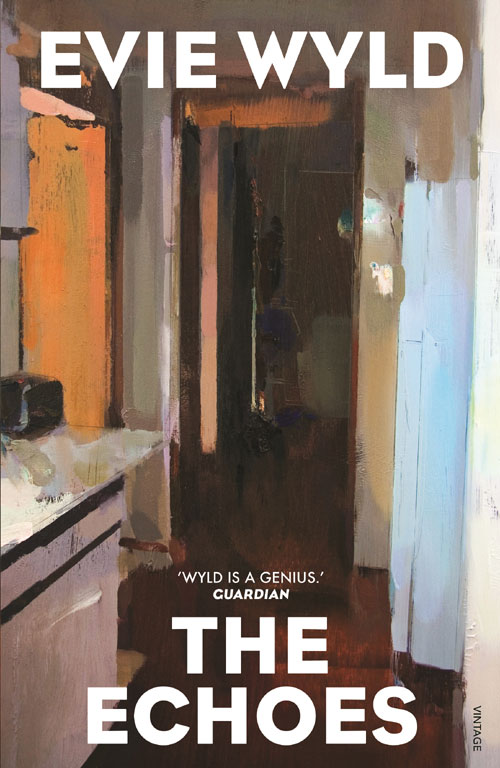
London based Anglo-Australian author Evie Wyld’s 2021 novel, The Bass Rock, which won the Stellar Prize literary award in the same year, was a riveting read. Her new book, The Echoes, looks like it will follow suit, given it incorporates elements of The Bass Rock, including settings across several locations and time, and a dollop of the supernatural thrown in for good measure:
Max didn’t believe in an afterlife. Until he died. Now, as a reluctant ghost trying to work out why he remains, he watches his girlfriend Hannah lost in grief in the flat they shared and begins to realise how much of her life was invisible to him.
In the weeks and months before Max’s death, Hannah is haunted by the secrets she left Australia to escape. A relationship with Max seems to offer the potential of a different story, but the past refuses to stay hidden. It finds expression in the untold stories of the people she grew up with, the details of their lives she never knew and the events that broke her family apart and led her to Max.
Both a celebration and an autopsy of a relationship, spanning multiple generations and set between rural Australia and London, The Echoes is a novel about love and grief, stories and who has the right to tell them. It asks what of our past we can shrug off and what is fixed forever, echoing down through the years.
RELATED CONTENT
Australian literature, authors, books, Evie Wyld, literature, novels
That time Douglas Adams unofficially signed copies of his books in Sydney, Australia
22 July 2024
If you enjoyed the novels of late British author Douglas Adams, you may enjoy this in-depth article about his later life, by Jimmy Maher.
Adams, it seems, did not restrict his particular brand of humour to the written word. A regular customer at a coffee shop I used to go to, told me about an encounter (of a sort) with Adams, in Sydney, Australia, sometime in the late 1990’s. My friend at the coffee shop once worked at a large bookshop in Sydney’s CBD.
He told of the day that Adams — who was presumably in Australia promoting his latest work — arrived at the shop unannounced, and made his way to the sci-fi section. Apparently, his most recent book, plus a selection of others, were on display in a promotional cardboard gondola, similar to what you see on this webpage.
Adams, without saying a word to anyone, pulled a pen from his pocket, and proceeded to sign random copies of his books. Before turning to leave, he scrawled his name across the top of the gondola, and walked out of the shop, again, without saying a word to anyone.
My friend told me how a huddle of bewildered bookshop staff quickly gathered at the gondola, trying to make sense of what had just happened. “Was that him?” was a phrase uttered numerous times apparently. Signed copies of Adams’ novels must have been a windfall for those who bought them…
RELATED CONTENT
authors, books, Douglas Adams, literature, novels, science fiction, writers
Do you share your birthday with a famous author?
30 April 2023
Australian writer and book reviewer Sheree Strange has put together a list of the birthdays of well-known authors. If you’re stuck for a birthday gift idea for a friend or relative, maybe you could get them a book written by the writer who they share their birthday with.
RELATED CONTENT
First time authors report negative publishing experiences
26 April 2023
A recent survey conducted by British book industry magazine The Bookseller, found a little over half of first time authors did not finding the publishing experience positive:
Among the majority who said they had a negative experience of debut publication, anxiety, stress, depression and “lowered” self-esteem were cited, with lack of support, guidance or clear and professional communication from their publisher among the factors that contributed.
There seemed to be little difference between independent and “big four” publishers, according to survey participants. Making for a smoother experience for first time authors seems to be something all publishers need to focus on.
RELATED CONTENT
Salman Rushdie struggles to write in aftermath of attack
8 February 2023
American based Indian author Salman Rushdie says he is struggling to write again, following a violent attack in August 2022, in a New Yorker article by David Remnick:
At this meeting and in subsequent conversations, I sensed conflicting instincts in Rushdie when he replied to questions about his health: there was the instinct to move on — to talk about literary matters, his book, anything but the decades-long fatwa and now the attack — and the instinct to be absolutely frank. “There is such a thing as P.T.S.D., you know,” he said after a while. “I’ve found it very, very difficult to write. I sit down to write, and nothing happens. I write, but it’s a combination of blankness and junk, stuff that I write and that I delete the next day. I’m not out of that forest yet, really.”
RELATED CONTENT